
Study Tour to Denmark: Circular Economy, Innovation, and Sustainability.
From Waste to Resources: A Closer Look at Danish Industrial Symbiosis.
How can one company’s waste be turned into another’s raw material? And how can excess heat generated in one production process be used as a resource by another industry?
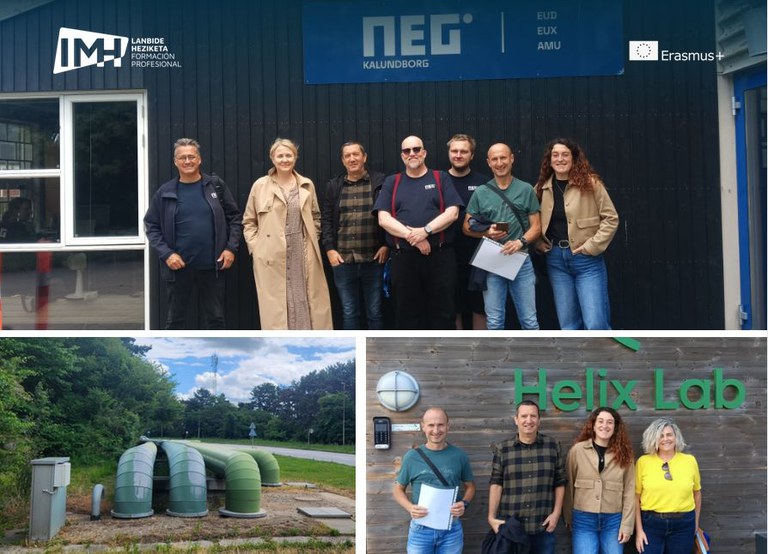
A group of vocational education teachers from IMH learned the answers to these questions firsthand during their Erasmus+ mobility program in Denmark.
The focus of the visit was Kalundborg Symbiosis, an international leader in industrial symbiosis and the circular economy.
In the Kalundborg model, public and private companies in the area collaborate to turn one company’s surplus into another’s resources.
They share waste generated in production processes, as well as energy, water, steam, and heat, to reduce resource consumption and minimize environmental impact.
IMH institute members learned about practical examples: waste is converted into materials for other companies, and the heat and condensate generated in industrial processes are utilized in the cooling systems of other facilities.
Thus, sustainability goes beyond environmental commitment and becomes a model based on inter-company collaboration, resource optimization, and competitiveness.
As part of the mobility program, they also visited the vocational training center of the NEG network (Network of Environmental Education and Green Transition).
In addition to learning how to incorporate the local educational model and sustainability into technical training, the group explored possible future exchanges or joint projects with IMH’s mechatronics students.
The group also visited the Roskilde Technical VET College. As an active participant in the Erasmus+ program with extensive experience in manufacturing, the visit helped identify new avenues for collaboration regarding international mobility and technical projects.
The Danish experience shows us that the circular economy is not just about generating less waste, but about reorganizing the relationships between businesses, schools, and people.
Now it is up to us to bring this knowledge to IMH’s training programs and future international projects.

